


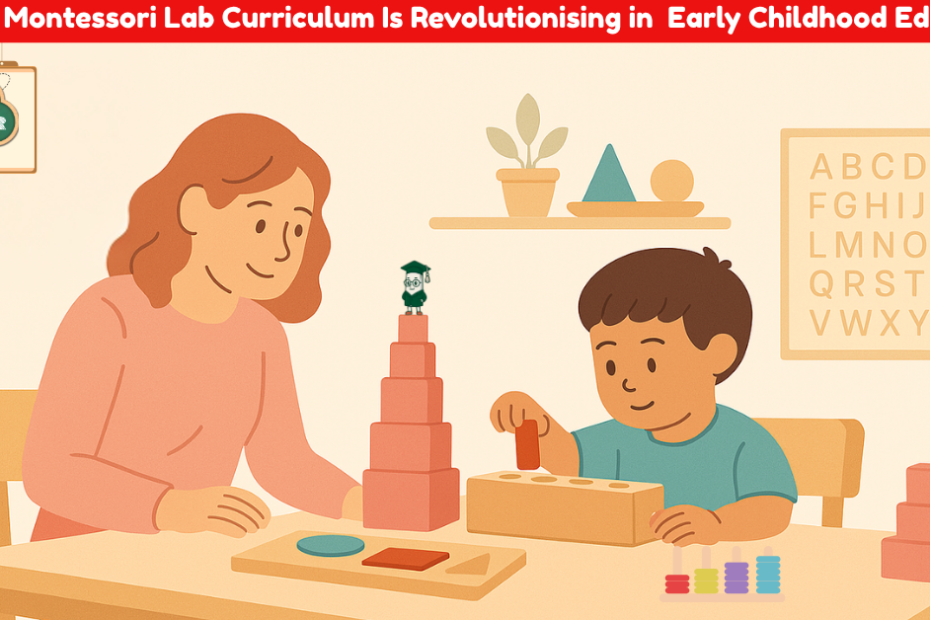
In recent years, preschools across the globe have been shifting from traditional teaching methods to more experiential approaches. At the heart of this transformation lies the Montessori Lab Curriculum, a progressive model that emphasizes hands-on learning, independence, and real-world exploration. Designed to nurture curiosity and build foundational life skills, this curriculum is now being adopted by forward-thinking early education institutions—and for all the right reasons
What Is the Montessori Lab Curriculum?
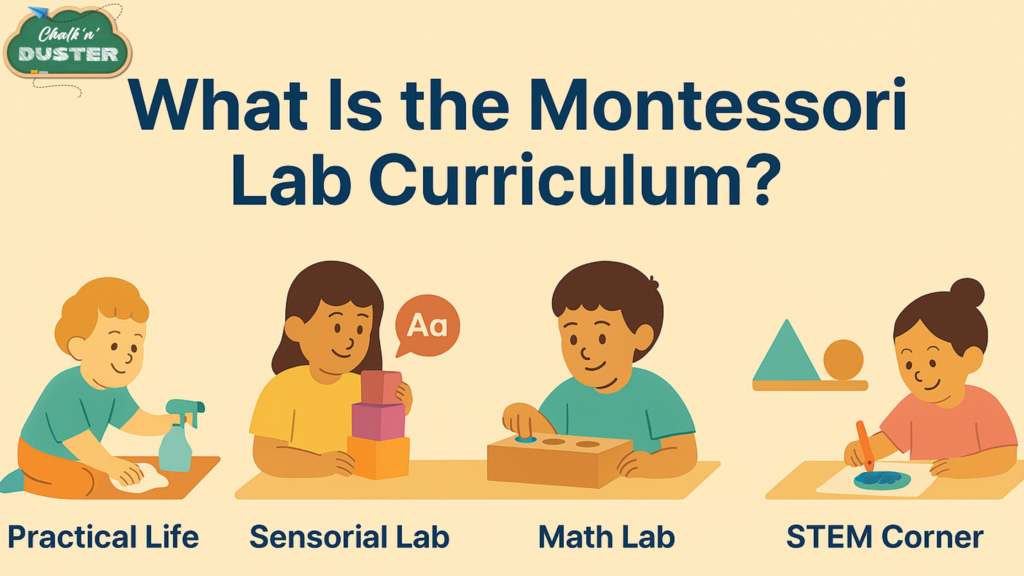
The Montessori Lab Curriculum is an evolved format of the classic Montessori approach, where learning is structured through dedicated “labs” or learning zones. Each lab focuses on specific developmental areas like:
- Practical Life: Activities that teach self-care, responsibility, and independence.
- Sensorial Lab: Materials that refine the five senses through touch, sight, sound, and smell.
- Language Lab: Tools that develop vocabulary, phonetics, reading, and storytelling.
- Math Lab: Concrete materials to understand numbers, quantity, and logic.
- STEM Corner: Age-appropriate science and technology explorations.
- Art & Culture Lab: Creative expression and exposure to global traditions.
These labs allow children to explore concepts at their own pace, guided gently by trained facilitators
Why It’s Gaining Popularity in Preschools
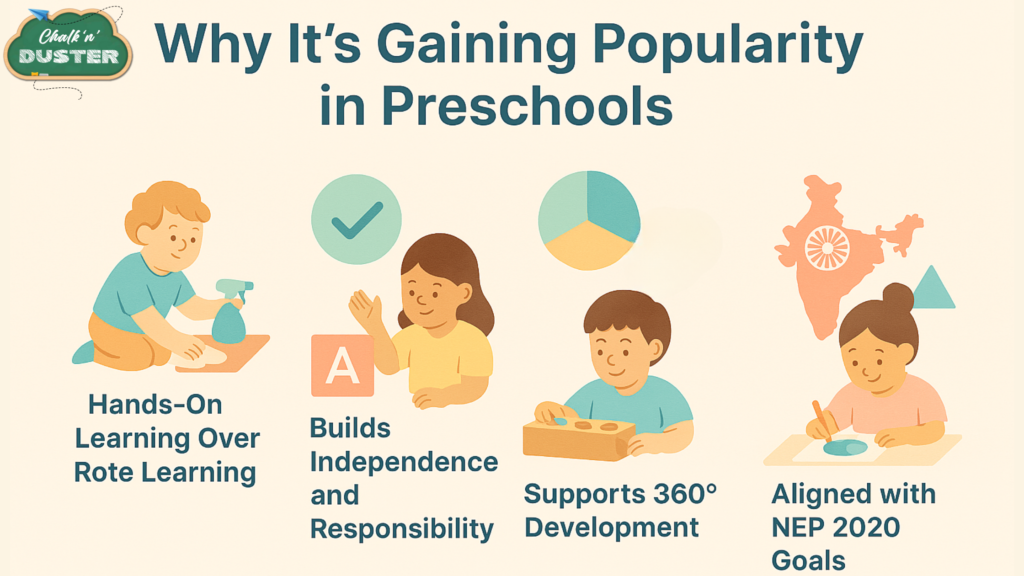
- Hands-On Learning Over Rote Learning
Instead of memorizing information, children experience concepts physically and visually. Pouring water teaches measurement, while sandpaper letters develop tactile memory for alphabets. - Builds Independence and Responsibility
Children take ownership of their learning space. They choose activities, return materials, and solve problems themselves, which boosts confidence and discipline. - Supports 360° Development
The Montessori Lab Curriculum focuses on cognitive, emotional, social, and physical growth simultaneously, ensuring balanced development rather than academic pressure alone. - Aligned with NEP 2020 Goals
India’s National Education Policy emphasizes play-based, activity-driven learning in early years. Montessori Labs naturally fulfill these objectives, making them a perfect match for modern Indian preschools.
Real-World Skills for Lifelong Success
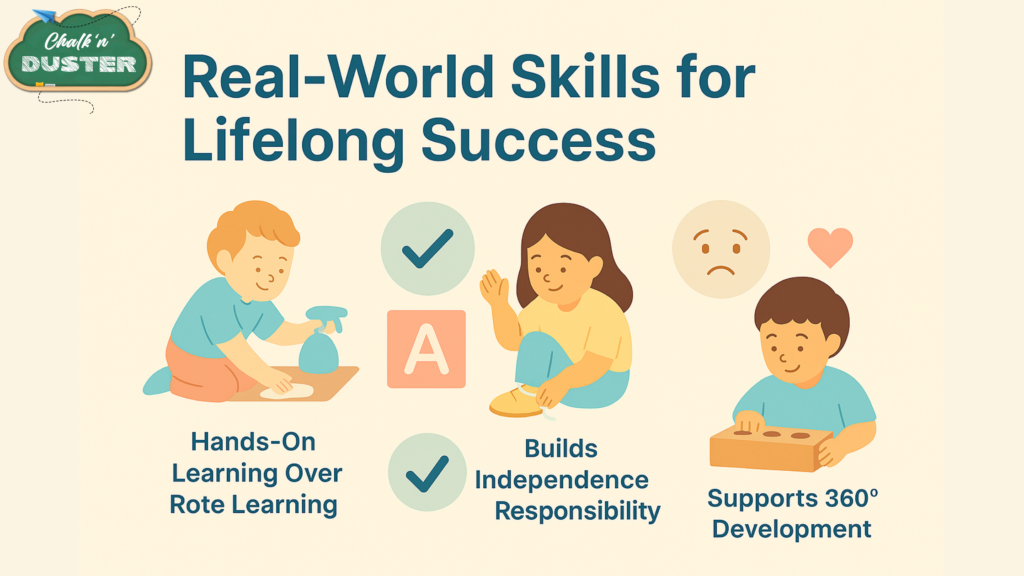
From pouring water to tying shoelaces, from early math to expressing emotions—Montessori labs give kids a toolkit of skills that matter in everyday life. They don’t just learn what to think but understand how to think, reason, and reflect.
How Preschools Are Implementing It
Innovative schools are designing classrooms with flexible lab stations, rotating activity sets, and child-led exploration time. Trained Montessori educators facilitate rather than dictate. Many schools even combine digital tools with Montessori methods, creating a blended learning experience.
How Chalk n Duster Helps Bring It to Life
Chalk n Duster, a leading preschool solutions provider, plays a crucial role in implementing the Montessori Lab Curriculum effectively. They help preschools set up fully equipped Montessori labs with age-appropriate materials, scientifically designed learning corners, and layout planning.
From curriculum design to staff training, Chalk n Duster supports schools with everything needed to adopt a lab-based Montessori model. Their ready-to-use classroom kits and customizable learning stations ensure that schools maintain quality while also meeting NEP 2020 guidelines. For educators looking to transition into experiential early learning, Chalk n Duster is the go-to partner for smart, scalable, and impactful solutions.
Final Verdict
The Montessori Lab Curriculum is more than just a teaching method—it’s a mindset shift. In a world that values creativity, adaptability, and critical thinking, this curriculum provides children with the perfect launchpad. As more preschools adopt this approach with support from expert partners like Chalk n Duster, we move closer to an education system that truly respects the individuality and potential of every child.