Do you love early childhood education and dream of owning a playschool by 2025? If yes, then you’re not alone. In fact, with the rising demand for quality preschool education in India, launching a playschool is not only a rewarding endeavor but also a smart business move. Moreover, it’s a chance to make a real difference in young lives. However, it’s important to remember that this is more than just a passion project — it requires careful planning, legal compliance, financial investment, and thoughtful execution. Fortunately, this step-by-step guide will walk you through everything you need — from legal registrations and investment planning to classroom setup and curriculum design. By the end, you’ll be equipped with the clarity and confidence to launch your own playschool.
Why
2025 Is an Ideal Year to Open a Playschool
To begin with, the preschool industry in India is booming. As urbanization spreads and awareness about early childhood education grows, more parents are actively seeking structured learning environments for their children. In addition, working parents are increasingly looking for safe, educational spaces that double as daycare. Therefore, 2025 presents a golden opportunity to tap into this expanding market. Especially in Tier-2 and Tier-3 cities, the demand for quality playschools is rising rapidly.
Tier 1: Major metros (e.g., Delhi, Mumbai)
Tier 2: Mid-sized cities (e.g., Lucknow, Jaipur)
Tier 3: Smaller towns (e.g., Agra, Bhopal)
So, if you’ve been waiting for the right time — this is it
Step
1: Legal Requirements to Open a Playschool
To begin with, playschools in India are not governed by a central education law. Nevertheless, certain legal steps are essential to build credibility and avoid future issues. Without them, you may face trust issues with parents or even legal complications. Therefore, it’s crucial to get your paperwork in order from Day
Legal Checklist:
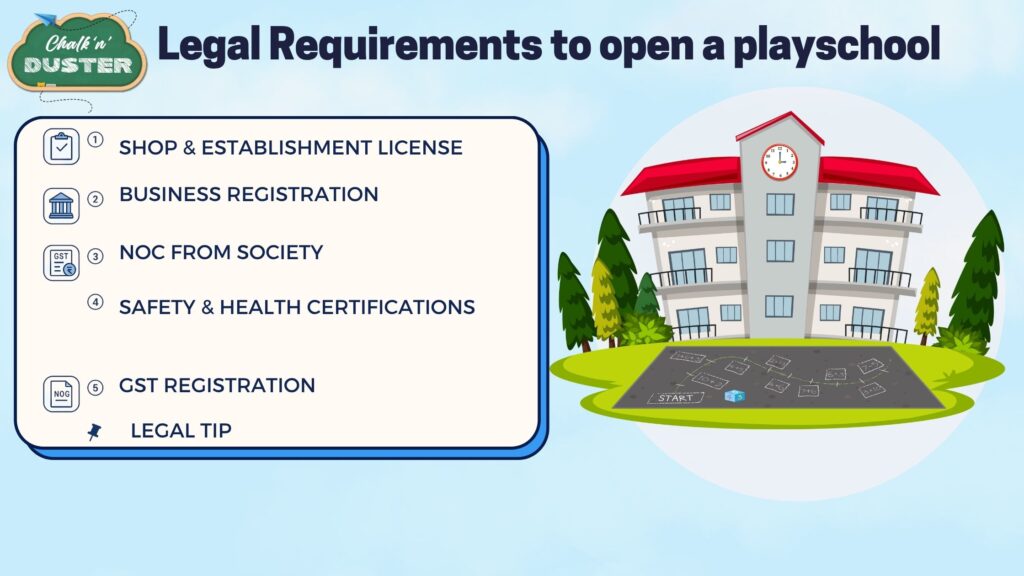
Business Registration – Choose between sole proprietorship, partnership, LLP, or private limited. In most cases, a private limited company offers better scalability.
Shop & Establishment License – Register with your local municipal authority to operate legally. Additionally, this helps in getting other approvals faster.
GST Registration – Mandatory if your turnover exceeds ₹20 lakhs. Even if optional, it adds credibility and professionalism.
Fire & Sanitation Certificate – Ensures safety and hygiene standards, which parents deeply value. Not only that, it’s a legal safeguard in case of emergencies.
NOC from Society – Required if operating in a residential building. Otherwise, you may face objections from neighbours or RWAs.
To sum up, consult a local CA or legal advisor for region-specific compliance. That way, you stay ahead of any regulatory surprises.
Step
2: Choosing the Right Location & Setup
Next, let’s talk about space. The environment plays a crucial role in a child’s comfort and development. As a result, selecting the right location and infrastructure is key.
Ideal Infrastructure Includes:
1000–1500 sq. ft. of open, ventilated space
2–3 brightly colored, well-lit classrooms
Non-slippery floors and child-proof furniture
Outdoor/indoor play zone for physical activity
Separate washrooms for boys and girls
CCTV, first aid, and emergency exit plans
In addition, make sure the location is:
Close to residential colonies
Easily accessible by road
Equipped with basic parking facilities
All in all, the space should feel safe, cheerful, and child-friendly.
Step
3: Financial Planning & Investment
Estimated Initial Investment (2025):
Now let’s talk money. Starting a playschool in India is relatively affordable, especially if you choose to go independent rather than opt for a franchise.
Estimated Initial Investment (2025):
Item
Approx. Cost (₹)
Property Rent/Lease Deposit
1,00,000–3,00,000
Interior Design & Furniture
1,50,000–3,00,000
Toys, Learning Materials
50,000–1,00,000
Marketing & Branding
30,000–70,000
Staff Salaries (First 3 months)
90,000–1,50,000
Licenses & Legal Work
20,000–50,000
Total
₹4–8 Lakhs
Recurring
Monthly Expenses:
Staff wages
Electricity and water bills
Cleaning and maintenance
Stationery and snacks
Consequently, you should plan for both upfront and ongoing costs. This way, you ensure smooth operations without financial stress.
Step
4: Curriculum and Staff Hiring
Once your setup is ready, the next step is to focus on what truly matters — the learning experience and the people delivering it.
Curriculum Types:
Experiential Learning – Learning by doing
Play-Way Method – Learning through play
Theme-Based Learning – Weekly or monthly themes
Hybrid DIY Model – Combine methods based on children’s interests
In other words, don’t stick to a rigid format. Instead, stay flexible and child-centric.
Staff Requirements:
NTT-trained teachers
Friendly caretakers/helpers
Admin/Receptionist (optional)
Cleaners & security staff
Above all, hire individuals who genuinely care for children and can create a nurturing environment. After all, your team is the heart of your playschool.
Step
5: Smart Marketing and Branding Tips
At this point, it’s time to spread the word. You don’t need a massive budget — just smart, local strategies that build trust and visibility.
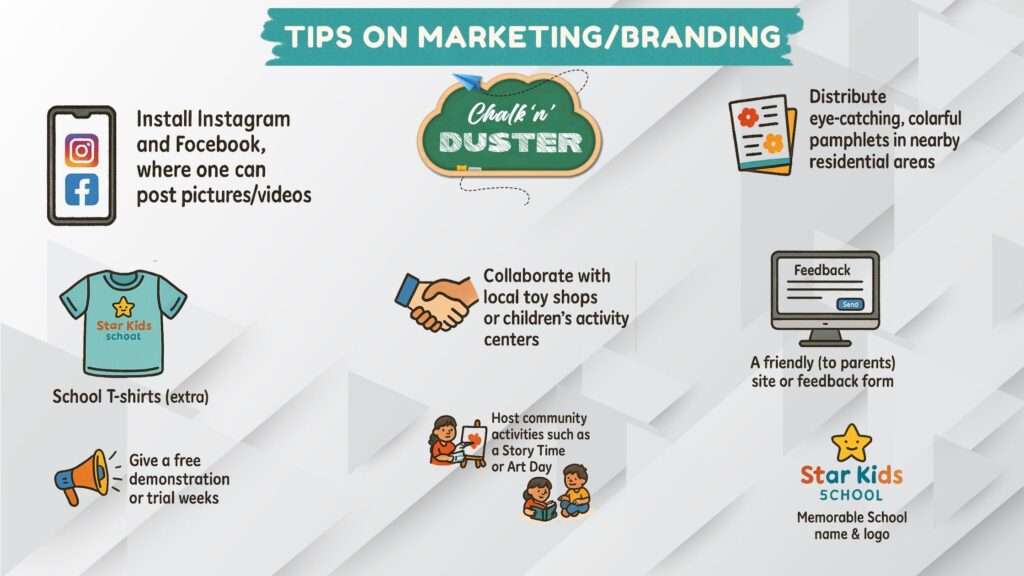
Low-Budget Marketing Ideas:
– Share engaging videos & reels on Facebook/Instagram
– Distribute colorful pamphlets in nearby societies
– Partner with toy stores or daycare centers
– Offer free trial weeks or demo classes
– Host mini-events like Drawing Day or Story Time
Branding
Essentials:
Catchy name + creative logo
Optional uniforms or school t-shirts
WhatsApp group for parent updates
Feedback forms or a simple website
In short, focus on building relationships — not just reach.
Step
6: Fee Structure & Income Planning
Now that your playschool is ready to launch, it’s important to set a fee structure that’s fair and competitive.
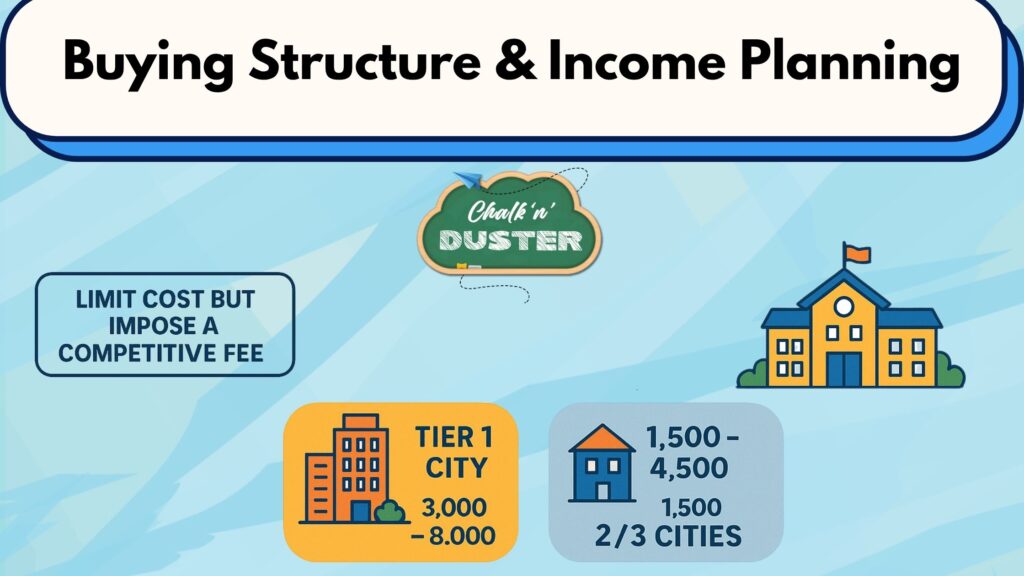
Suggested Monthly Fee (2025):
Tier 1 cities: ₹3,000 – ₹8,000
Tier 2/3 cities: ₹1,500 – ₹4,500
Smart Income Tips:
Offer quarterly or yearly payment discounts
Introduce sibling discount programs
Keep the fee structure transparent and easy to understand
Consequently, you’ll attract more parents and encourage word-of-mouth referrals.
Step
7: Hygiene & Safety Guidelines
Last but not least, safety is non-negotiable. Parents want to know their children are in a secure, clean, and well-managed environment.
Safety Must-Haves:
Soft flooring and rounded furniture edges
First-aid kits and fire extinguishers
Clean drinking water and sanitized toilets
Pick-up policy with parental consent
Regular pest control and cleanliness routines
Additionally, conduct safety drills and train your staff in emergency protocols. That way, you’re always prepared
Final
Thoughts
In conclusion, starting a playschool in 2025 can be an exciting, meaningful, and profitable journey. With the right planning, legal setup, team, and curriculum, you can create a space where children thrive and parents feel confident.
If you’re looking for more ideas on preschool teaching techniques and classroom setup, don’t miss our guide on ChalkNDuster.
Still confused about launching your own playschool?
Drop your questions in the comments or DM us to get your free startup checklist today!